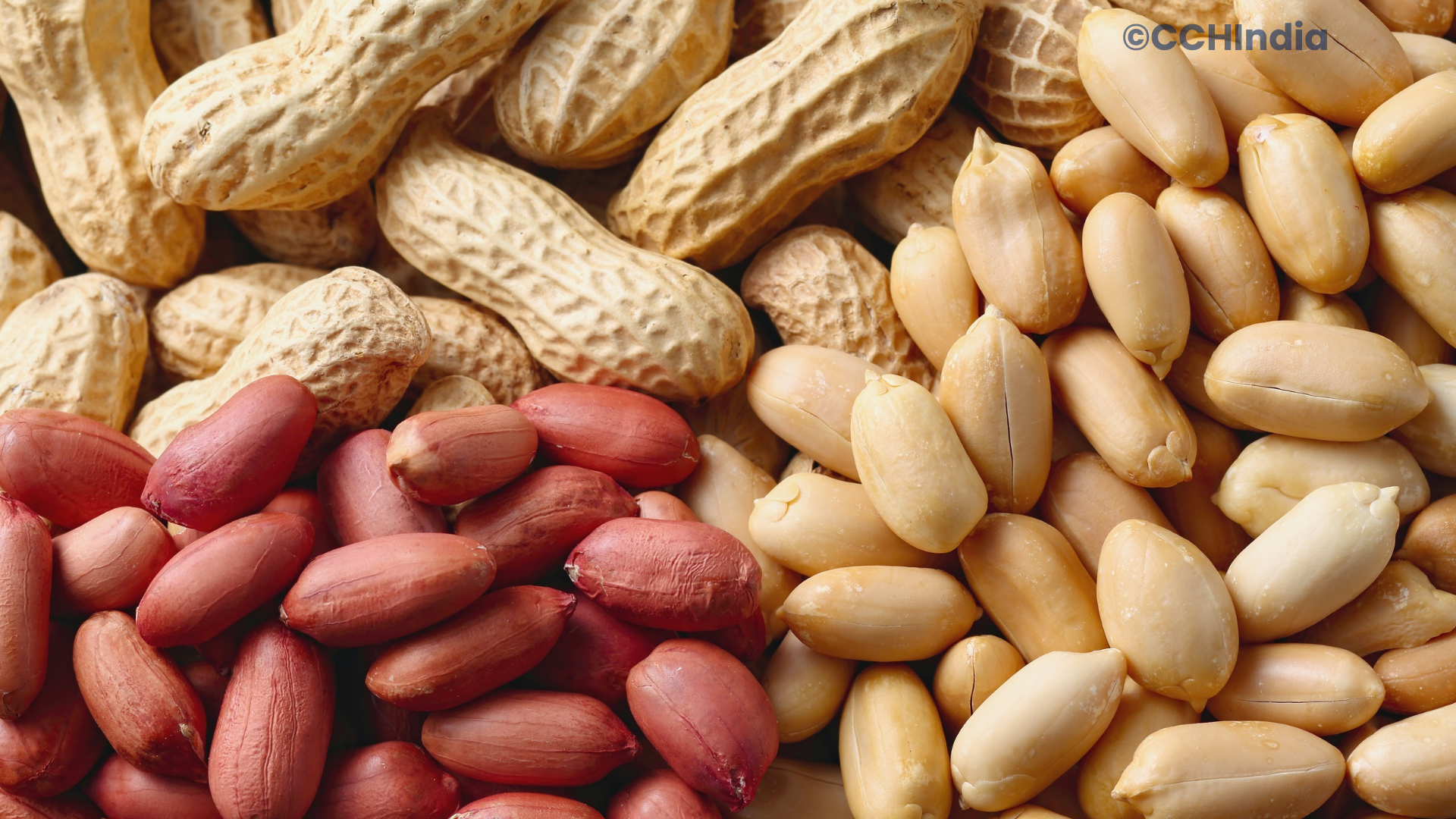
You ever notice how some of the simplest things around us carry the biggest weight? Peanuts, for example. Not fancy almonds or imported cashews… just peanuts. The ones you buy roasted in paper cones outside the railway station. The ones your grandmother crushed into chutney with a stone grinder. The ones farmers quietly grow while everyone talks about “cash crops.”
I was thinking about it the other day—why don’t we give this crop enough credit?
Peanuts in the soil, not just in snacks 🌱
Here’s something most people don’t realize: peanuts aren’t just good for munching, they’re actually good for the earth. Unlike a lot of crops that strip the soil bare, peanuts are little nitrogen-fixers. They leave the ground richer, not poorer. Sounds simple, right? But in a country where soil fatigue and chemical overload are eating away at farming, that’s huge.
I’ve met farmers in Gujarat who told me peanuts were like a “rest crop.” Plant them, and the soil breathes again. It’s sustainable farming hidden in plain sight.
A poor man’s protein? Or everyone’s delight?
We all know peanuts as “moongphali”—cheap, filling, everywhere. Some call it the poor man’s protein. But let’s be honest, who hasn’t had peanut chikki in winter and smiled? Or spooned peanut masala during a cricket match?
It’s in our thalis too—Maharashtrian bhakri with peanut chutney, Andhra palli chutney, Gujarati suki bhaji sprinkled with roasted groundnut. It’s the ingredient that quietly stretches curries, thickens gravies, and sneaks into laddoos.
I once carried a packet of peanut ladoos while traveling on a long train ride. Didn’t matter that I was sharing the compartment with strangers—by the time we finished, it felt like family. That’s the thing about peanuts. They’re equalizers.
From fields to futures
Here’s the part that makes me hopeful: peanuts might just be the future of sustainable farming in India. They don’t need as much water as rice. They enrich the soil. And when turned into oil, butter, or just plain roasted, they support millions of small traders and women-led businesses.
But still, peanuts don’t get the glam of quinoa or avocado. Why? Maybe because they’re too ordinary. Too humble.
A quiet revolution in a shell 🥜
Sometimes I think, if India’s going to solve its food and farming mess, it won’t be with some imported superfood. It’ll be with something we’ve had all along. The peanut. Cheap, sturdy, nourishing, sustainable.
It’s not flashy. But maybe that’s the point.
Next time you crack open a handful of roasted groundnuts, think about it. You’re not just eating a snack—you’re holding a tiny piece of India’s farming future.